Starting the MEVP-011 project in the IGNOU MSCENV program can feel daunting. Many students wonder: “How do I pick the right topic?”, “Will my supervisor approve my proposal?”, or “Can I handle the research and write the report on time?” These fears are normal. But with a clear roadmap, you can tackle the project step by step. The MEVP-011 project is not just an academic requirement; it is a chance to apply environmental science knowledge to real-world problems.
What Is MEVP-011 and Why Is It Important?
The MEVP-011 project is an 8-credit mandatory component of the MSCENV program. Its purpose is to:
- Provide practical experience in environmental research
- Bridge the gap between theory and fieldwork
- Develop analytical, problem-solving, and report-writing skills
Completing MEVP-011 successfully demonstrates your ability to analyze environmental issues, apply research methodology, and present findings clearly — essential skills for academic and professional growth.
How to Choose the Right Project Topic?
Selecting a topic is the first and most crucial step. A well-chosen topic makes the project smoother and ensures relevance.
Tips for Choosing a Topic:
- Focus on Real-World Problems: Choose an environmental issue that affects your community or region.
- Keep It Manageable: Avoid overly broad topics; ensure it can be completed within the project timeline.
- Leverage Available Data: Combine fieldwork with secondary data from reports, research papers, and online databases.
- Align With MSCENV Goals: Ensure the topic reflects sustainability, conservation, or environmental management themes.
Example Topics for MSCENV MEVP-011:
- Air Quality Assessment in Urban Areas
- Impact of Climate Change on Apple Cultivation in Himachal Pradesh
- Groundwater Quality Monitoring in Rural Regions
- Solid Waste Management in Residential Communities
- Awareness and Implementation of Renewable Energy Practices
Who Can Guide Your MEVP-011 Project?
A project supervisor is vital for guidance throughout your MEVP-011 journey. Eligible supervisors include:
- IGNOU academic counsellors with experience in MSCENV courses
- Teachers or researchers in Environmental Science or related disciplines
Tips:
- Choose a supervisor who is accessible and responsive
- Maintain regular communication
- Ensure your supervisor signs your proposal to confirm feasibility
A supportive supervisor helps refine your topic, methodology, and data collection plan, preventing unnecessary delays.
How to Prepare a Strong Project Proposal
The project proposal is the foundation of your MEVP-011 project. It should be around 1,500 words and include:
- Title – concise and specific
- Introduction & Objectives – why the topic is important and what you aim to achieve
- Methodology – describe data collection methods, tools, and techniques
- Scope & Relevance – explain the impact of your research
- Future Directions – suggest areas for further research
A well-prepared proposal increases your chances of approval and smooth project execution.
How to Submit Your MSCENV MEVP-011 Project Proposal
Once your proposal is ready, submission is the next critical step. Approval is mandatory before starting your project.
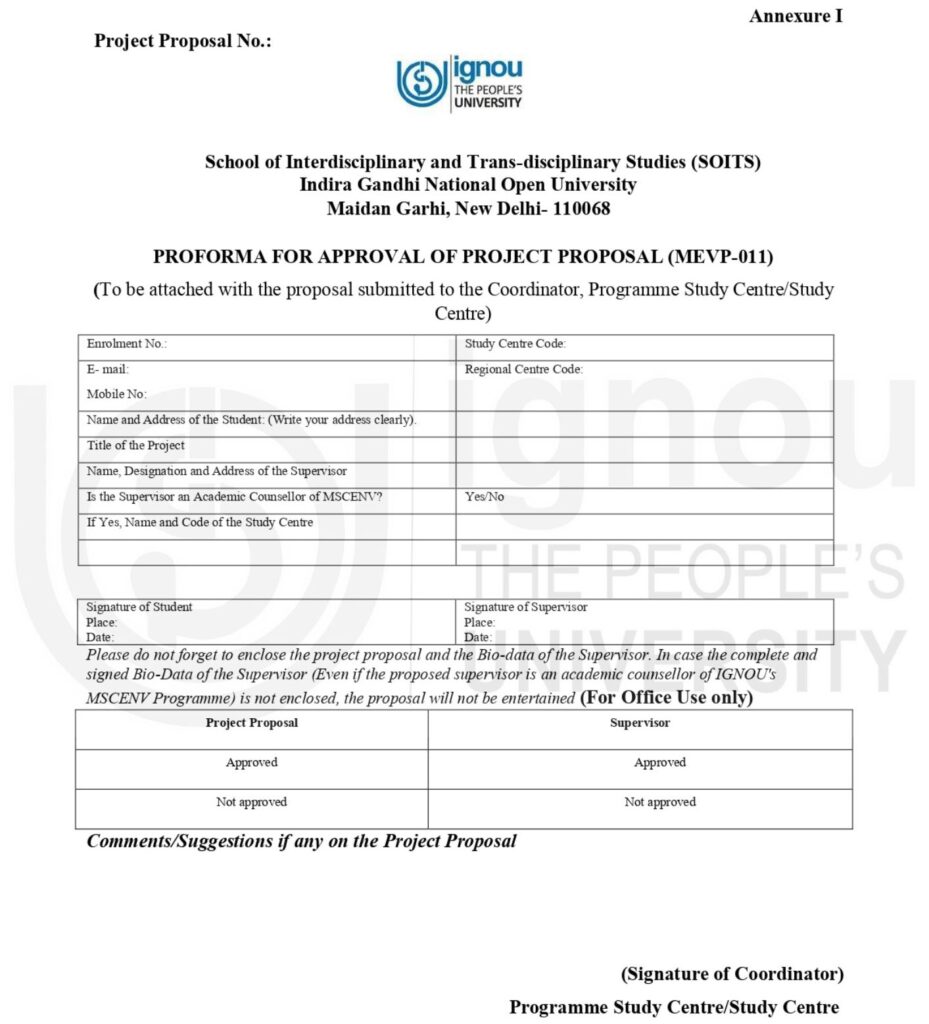
Step 1: Complete the Project Proposal Form (Proforma)
- Fill in all sections accurately, including personal details, project title, objectives, methodology, and expected outcomes.
- Attach the signature of your supervisor to validate guidance.
Step 2: Attach Supporting Documents
- Supervisor’s bio-data
- Authorization letters if needed for data access or field visits
Step 3: Submit to the Study Centre Coordinator
- Hand over the complete proposal and documents to the Programme Study Centre (PSC) or Study Centre Coordinator
- Approval typically takes up to one month or more
Step 4: Receive Approval or Feedback
- Approved proposals allow you to start project work
- Non-approval comes with feedback for revision; resubmit the revised proposal
Pro Tips for Smooth Submission:
- Ensure all sections are complete and accurate
- Maintain regular supervisor communication
- Submit early to allow time for revisions
- Keep a photocopy for future reference
What Happens After Proposal Approval?
Once your proposal is approved:
- Plan your data collection schedule
- Collect data systematically
- Document fieldwork thoroughly
- Use tools like Excel or GIS for analysis
- Maintain originality — plagiarism can lead to rejection
A structured approach ensures your project runs smoothly and is of high quality.
How to Write the MSCENV (MEVP-011) Project Report
Writing the project report is the most critical step. A well-structured report reflects your research skills and environmental knowledge. Follow this guide:
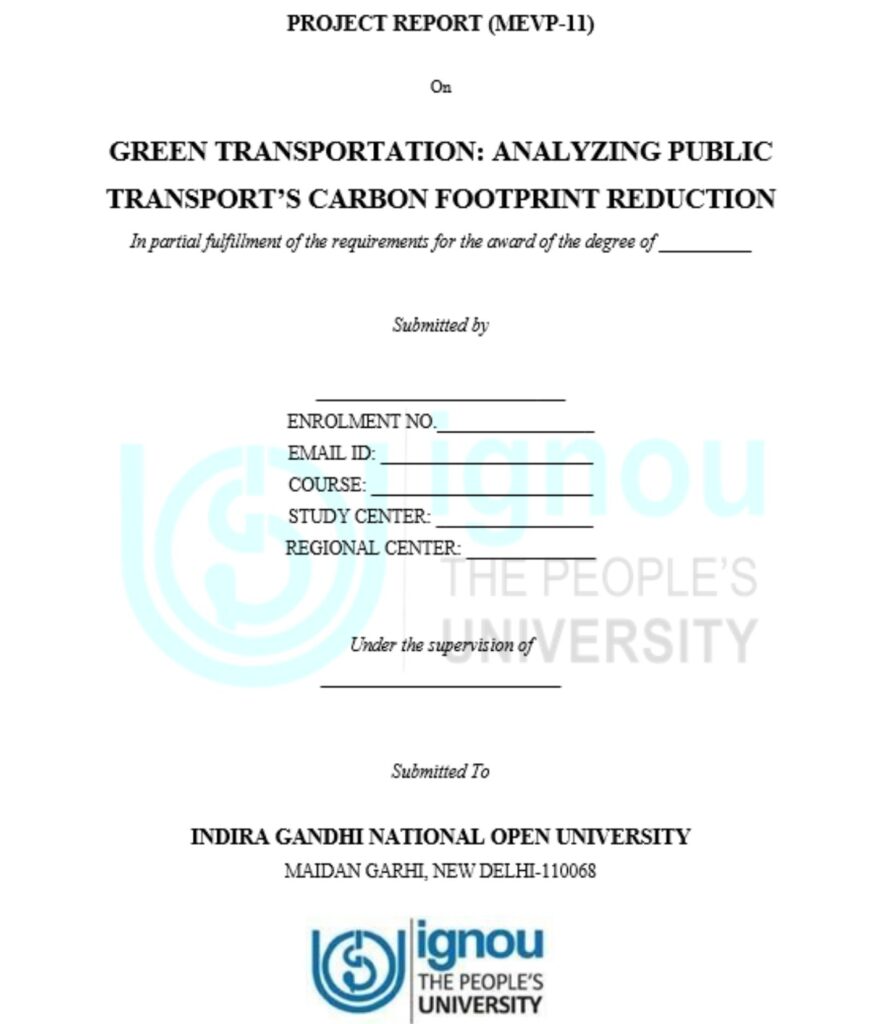
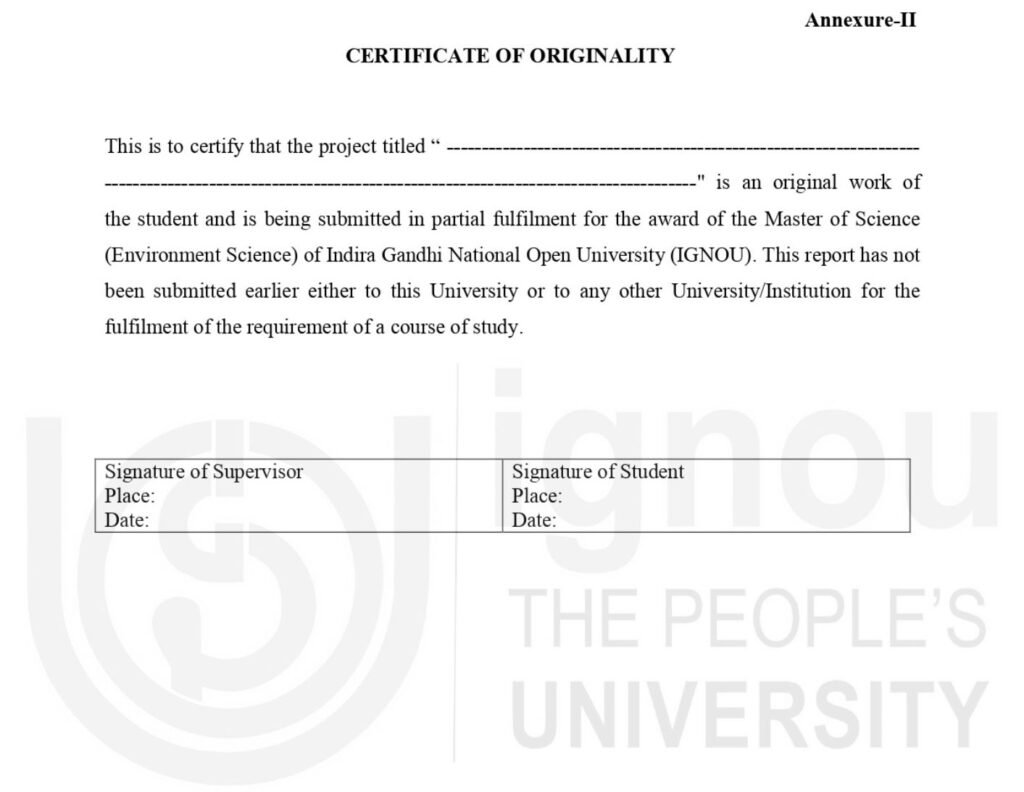
1. Title Page and Certificate of Originality
- Use the approved title
- Include name, enrolment number, and MSCENV program code
- Attach the Certificate of Originality, signed by you and your supervisor
2. Table of Contents
- List chapters, subheadings, tables, figures, and appendices
- Ensure it is clear and organized
3. Chapter 1: Introduction
- Introduce the research problem
- State objectives clearly
- Discuss background and significance
- Highlight the scope of the study
4. Chapter 2: Research Methodology
- Describe research type: qualitative, quantitative, or mixed
- Data collection techniques: surveys, interviews, field measurements, secondary data
- Sampling method if applicable
- Tools/software used: Excel, GIS, SPSS, etc.
- Justify why these methods are suitable
5. Chapter 3: Data Collection and Analysis
- Present data using tables, graphs, and charts
- Include raw data in appendices
- Discuss patterns, trends, and anomalies
- Relate findings to your research objectives
6. Chapter 4: Results and Interpretation
- Discuss main results
- Compare with previous studies
- Explain reasons behind trends or anomalies
- Use subheadings for clarity
7. Chapter 5: Conclusions and Recommendations
- Summarize how objectives were met
- Draw conclusions based on data
- Provide actionable recommendations
- Suggest areas for future research
8. Chapter 6: Summary
- Provide a concise overview of the project
- Highlight objectives, methodology, key findings, and conclusions
9. Bibliography / References
- Include all cited sources in a consistent style (APA or MLA)
- Ensure journals, books, websites, and reports are properly listed
10. Appendices
- Attach questionnaires, field photographs, raw data tables, or consent forms
- Label all appendices clearly and reference in the main text
Practical Tips:
- Write in simple, clear language
- Be consistent in formatting and units
- Proofread for grammar and spelling
- Include visuals to explain data
- Stay focused on objectives
- Avoid plagiarism and provide original interpretations
- Seek supervisor feedback on drafts
Submission of MSCENV MEVP-011 Project Report
After completing your report:
- Submit one hard copy
- Address: The Registrar, Student Evaluation Division, IGNOU, Maidan Garhi, New Delhi – 110068
- Label envelope: “M.Sc. Environmental Science (MSCENV) Project Report (MEVP-011)”
- Keep a photocopy for viva-voce
How to Prepare for Viva-Voce
The viva-voce tests your understanding of:
- Your project topic and relevance
- Research methodology and data collection techniques
- Key findings and conclusions
Tips:
- Revise objectives, methodology, and results
- Use visuals to explain key points
- Practice clear and confident communication
Viva accounts for 30% of your total marks, so preparation is crucial.
Common Mistakes to Avoid in MEVP-011
- Plagiarism or copying content
- Missing forms or signatures
- Title mismatch between proposal and report
- Late submission
- Vague objectives or unclear methodology
Avoiding these mistakes ensures higher marks and smooth project completion.
Evaluation of MSCENV MEVP-011
Marks distribution as per guidelines:
- Project Report: 70
- Viva-Voce: 30
You must score at least 40% in each component to pass. Evaluation focuses on:
- Topic relevance
- Clarity and structure of report
- Data analysis and interpretation
- Originality and presentation quality
If You Fail MEVP-011
- Submit a new project proposal
- Learn from previous mistakes and plan timelines carefully
- Choose a new topic if necessary
Quick Tips for MEVP-011 Success
- Start early and plan timelines
- Maintain clear documentation
- Communicate with your supervisor regularly
- Ensure originality and avoid plagiarism
- Proofread before submission
- Focus on application of environmental knowledge
Final Thoughts
The MEVP-011 project in IGNOU’s MSCENV program is more than an academic requirement — it is an opportunity to research real environmental problems, apply your knowledge, and gain practical experience. Following a structured plan, maintaining consistent documentation, and seeking guidance from your supervisor can help you complete the project confidently and successfully.
WhatsApp us if you face challenges like busy schedules, topic selection, data collection, or guide approval—we provide high-quality MEVP-011 projects meeting IGNOU standards for timely submission.